Loading...
Serving Marshall, TX and surrounding areas. (430) 214-0042
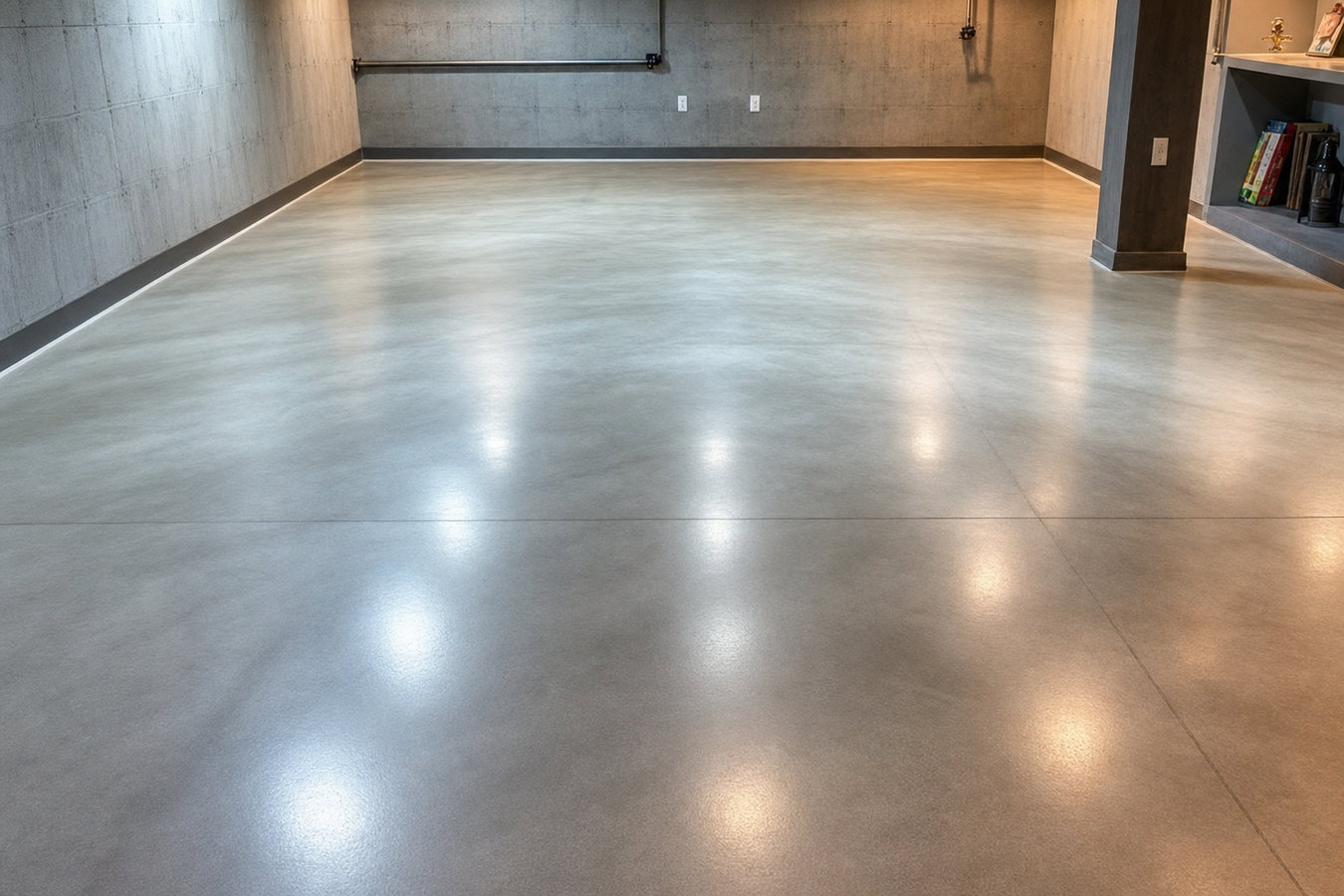
Most basement floors fail because moisture testing and slab prep get skipped. We start there - so the finish you choose actually holds up through East Texas summers and wet winters.
Basement flooring in Marshall starts with evaluating the concrete slab underneath for cracks, moisture, and levelness before any finish goes down. Most projects complete in one to three days once prep is done, and the right coating or polish can transform an unused concrete floor into a clean, durable surface that holds up to East Texas humidity year after year.
Marshall sits on clay-heavy soil and gets close to 50 inches of rain per year - conditions that push moisture upward through basement slabs and cause concrete to crack over time. Any flooring installed without addressing those factors first will fail, usually within a year or two. The good news is that the same slab causing problems today can become a solid foundation for a finished floor once it is properly prepared. For surfaces outside the basement, concrete grinding and surface preparation follows the same principles.
A finished basement floor also changes how you use the space. Homeowners who have lived around a rough gray slab for years are often surprised by how much more usable the room feels once the floor looks clean and done.
If you can see cracks in the concrete - even thin ones - the slab has been moving. In Marshall, where clay soil expands and contracts with the seasons, this is very common. Cracks left untreated will grow over time and make any future flooring project more expensive and more likely to fail.
If your basement floor feels wet to the touch or shows dark patches after a heavy rain, moisture is wicking up through the slab. Marshall gets significant rainfall, and basements here are especially vulnerable. A floor that shows this should be sealed and moisture-tested before any finish coating goes down.
If paint, tile, or another covering on the floor is lifting at the edges or bubbling in the middle, moisture underneath is almost certainly the cause. This is the floor telling you it was installed over a damp slab or the original coating has worn out. Applying a new finish over the same problem produces the same result.
A musty smell in a basement - even on dry days - usually means moisture is trapped in or under the floor. In East Texas's humid climate, this can happen gradually without any visible water. Left unaddressed, these conditions lead to mold growth that spreads beyond the floor itself.
We coat, polish, and resurface basement floors across Marshall and the surrounding area. Every project begins with a thorough slab assessment - moisture levels, crack locations, and surface condition - before we recommend a system. For homeowners dealing with significant slab deterioration, we often start with concrete grinding and surface preparation before any finish goes down. Where ongoing moisture control is the primary concern, concrete sealing may be the right first step.
The finish you choose depends on how you plan to use the space. A workshop or storage area has different needs than a home office or guest room. We explain the tradeoffs clearly so you can make a decision that fits both your budget and how the room will actually be used.
Suits basements used as workshops, laundry rooms, or storage areas where a tough, easy-to-clean, moisture-resistant surface is the priority.
A good fit for basements being converted into living space - cleaner looking than bare concrete and handles humidity without seams or grout.
The required first step when Harrison County clay soil movement has left cracks in the concrete before any coating or polish goes down.
Essential for Marshall-area basements where high rainfall and clay soils push moisture upward through slabs year-round.
Basements are less common in East Texas than in northern states, partly because of the region's clay-heavy soil and historically high water table. When a Marshall home does have a basement, that soil and moisture context shapes every flooring decision. Harrison County's expansive clay expands when wet and contracts when dry - a seasonal cycle that causes concrete slabs to crack and shift in ways that are entirely predictable once you understand the local conditions. Homeowners in Hallsville and Longview face the same dynamics, and the approach we use accounts for them from the first site visit.
Many Marshall homes were built in the mid-20th century, and older slabs in this area often have hairline cracks, uneven settling, and surfaces that were never properly sealed. These are not disqualifying problems - they are the normal baseline for a pre-1980 basement in East Texas. The key is having a contractor who identifies them upfront and addresses them in the estimate rather than discovering them after work begins. The Texas A&M AgriLife Extension provides detailed guidance on East Texas soil behavior that explains why these conditions are so consistent across the region. For moisture testing standards, the American Concrete Institute publishes the protocols that reputable contractors follow.
When you reach out we ask about the size of the basement, what is currently on the floor, and whether you have noticed any moisture or cracking. We reply within one business day and schedule an in-person visit - because no honest contractor can give you a real price without seeing the slab first.
We walk the basement, inspect the concrete condition, check for cracks and uneven spots, and test for moisture - especially important given Marshall's clay soil and rainfall levels. You receive a written estimate that separates prep work from the finished floor cost, so you understand exactly what you are paying for.
We grind the concrete surface, fill any cracks with patching compound, and clean the slab thoroughly. This is what determines whether your finished floor lasts years or starts failing within months. It takes most of the first day and is where quality is either built in or skipped.
Once the slab is prepped, the coating or polish goes down in the layers required by the product you chose. After the floor cures - typically 24 to 72 hours - we walk you through the finished space, point out anything to watch, and leave you with written care instructions.
We come to your home, test the slab, and give you a written estimate broken down by prep and finish - no surprises once work starts.
Marshall averages over 50 inches of rainfall per year, and moisture wicking up through concrete slabs is one of the most common causes of basement floor failure in East Texas. We test every slab before recommending a coating system - the wrong product applied over a damp slab will fail regardless of how well it is installed.
The most common reason basement floors fail early is a contractor who skips surface preparation and goes straight to coating. We grind, patch, and clean every slab before any finish goes down. You can ask any contractor directly what their prep process looks like - a one-line answer is a warning sign.
We understand how East Texas clay soils behave across seasons and factor that knowledge into every slab assessment. Cracks caused by soil movement are filled and stabilized - not just coated over. This is the detail that separates a floor that lasts from one that fails when the ground shifts.
We assess your slab honestly before quoting - including crack repairs and moisture work - so the number you agree to is the number you pay. The most frequent complaint about flooring contractors is a low quote that grows once work starts. We do not operate that way, and you will have it in writing.
A basement floor done right is one you never have to think about again - it handles humidity, resists staining, and makes the space worth using. Done wrong, it is a project you redo in 18 months. We make sure it is done right the first time.
The slab prep step that determines whether any coating bonds properly and lasts - done correctly before every basement flooring project.
Learn MoreA penetrating or topical seal that stops moisture migration through the slab - the right first step for damp Marshall-area basements.
Learn MoreWe are booking projects now - reach out today and we will get you on the schedule before the next wet season arrives.